
The German Chocolate Cake Recipe Your Grandma Wishes She’d Written Down
Let’s be honest — there’s a reason The German Chocolate Cake Recipe shows up at birthdays, Father’s Day cookouts, and those “I need to bring something impressive to the potluck” emergencies. It’s all about the coconut-pecan frosting. That gooey, caramel-like layer is the whole show, and once you’ve made it from scratch, you’ll understand why the store-bought tub version just doesn’t cut it anymore.
I still remember the first time I made this cake. I was convinced it would be a disaster — three layers? A frosting that involves cooking egg yolks on the stove without scrambling them? Surely that’s a recipe for kitchen chaos. But here’s the thing: it’s actually much more forgiving than it looks. You just need to know what you’re doing at each step, and that’s exactly what I’m going to walk you through.
Table of Contents
Key Takeaways
- German chocolate cake isn’t actually German — it’s named after Sam German, the man behind the original baking chocolate
- The cake itself is a soft, mildly chocolatey cake (not a fudgy chocolate cake) — the frosting brings the richness
- The coconut-pecan frosting is cooked on the stovetop and needs patience, not skill
- You can make this in two or three layers depending on your pans and your ambition level
- Want a lighter version? Skip to the FAQ for diabetic-friendly swaps
Wait, German Chocolate Cake Isn’t From Germany?
Nope. This one’s a fun bit of trivia to drop at your next dinner party. The “German” in German chocolate cake actually refers to a person — Sam German, who developed a type of dark baking chocolate for Baker’s Chocolate Company back in the 1850s. That chocolate eventually got named “German’s Chocolate” after him, and a century later, a recipe using it (built around a moist, lightly chocolate cake topped with coconut and pecans) made its way into a Texas newspaper and took off from there.
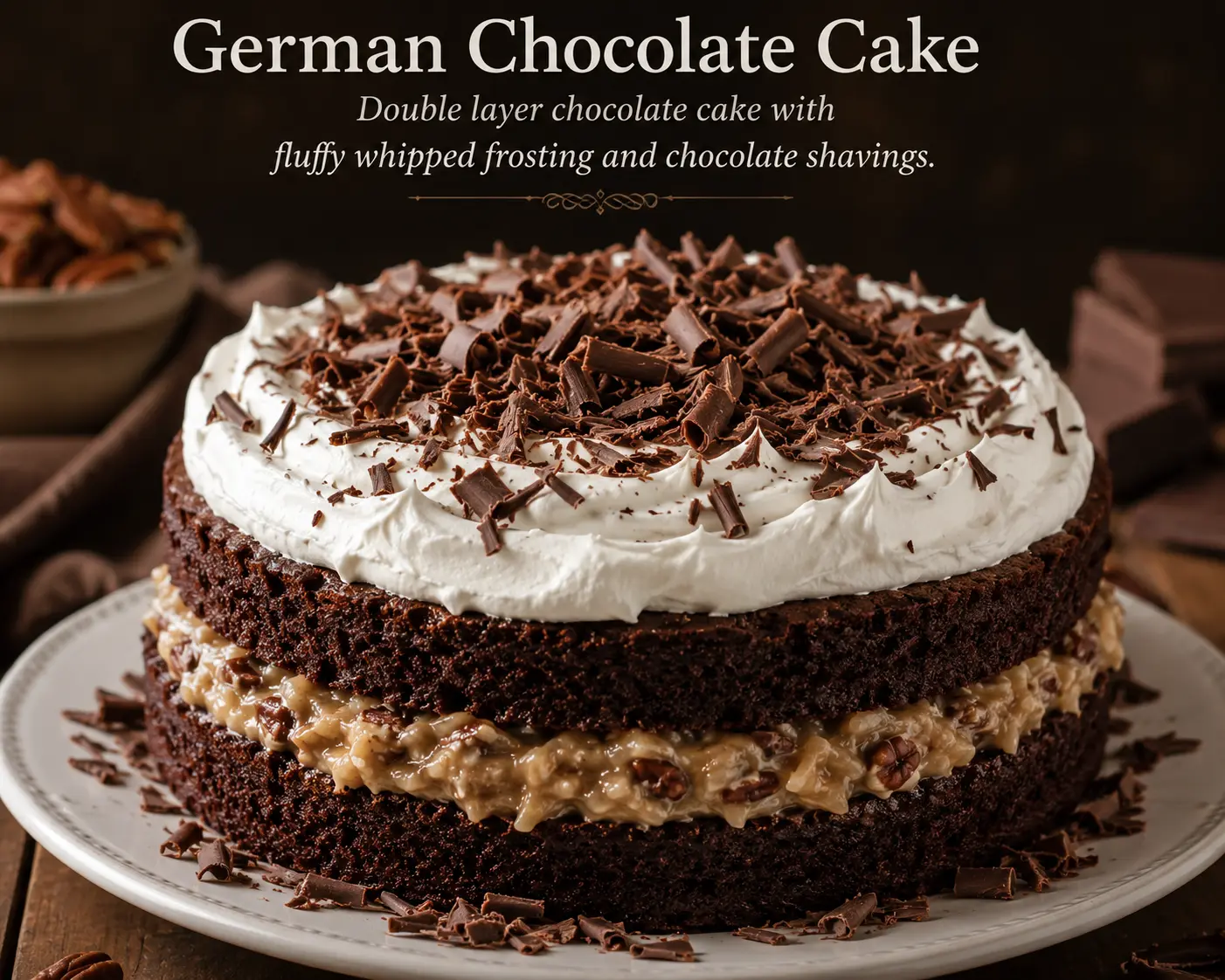
So technically, this cake’s whole identity is a happy accident of branding history. What matters for us, though, is the result: a cake that’s lighter and more delicate than a typical chocolate layer cake, designed specifically to be a backdrop for that incredible coconut-pecan frosting.
What You’ll Need
Before we get into the steps, let’s talk about ingredients. Nothing here is exotic — this is very much a “stuff you can grab at any grocery store” situation.
The German Chocolate Cake Recipe Your Grandma Wishes She’d Written Down
Ingredients
Equipment
Notes
Tools I Used for This German Chocolate Cake Recipe
A quick note on ingredients: Buttermilk is doing a lot of work here — it reacts with the baking soda to give you that tender, slightly tangy crumb. If you don’t have any, you can make a quick substitute by adding a tablespoon of lemon juice or white vinegar to regular milk and letting it sit for five minutes. It’s not exactly the same, but it’s close enough that nobody at the party will notice.
How to Make German Chocolate Cake, Step by Step
Melt the Chocolate (and Let It Cool!)
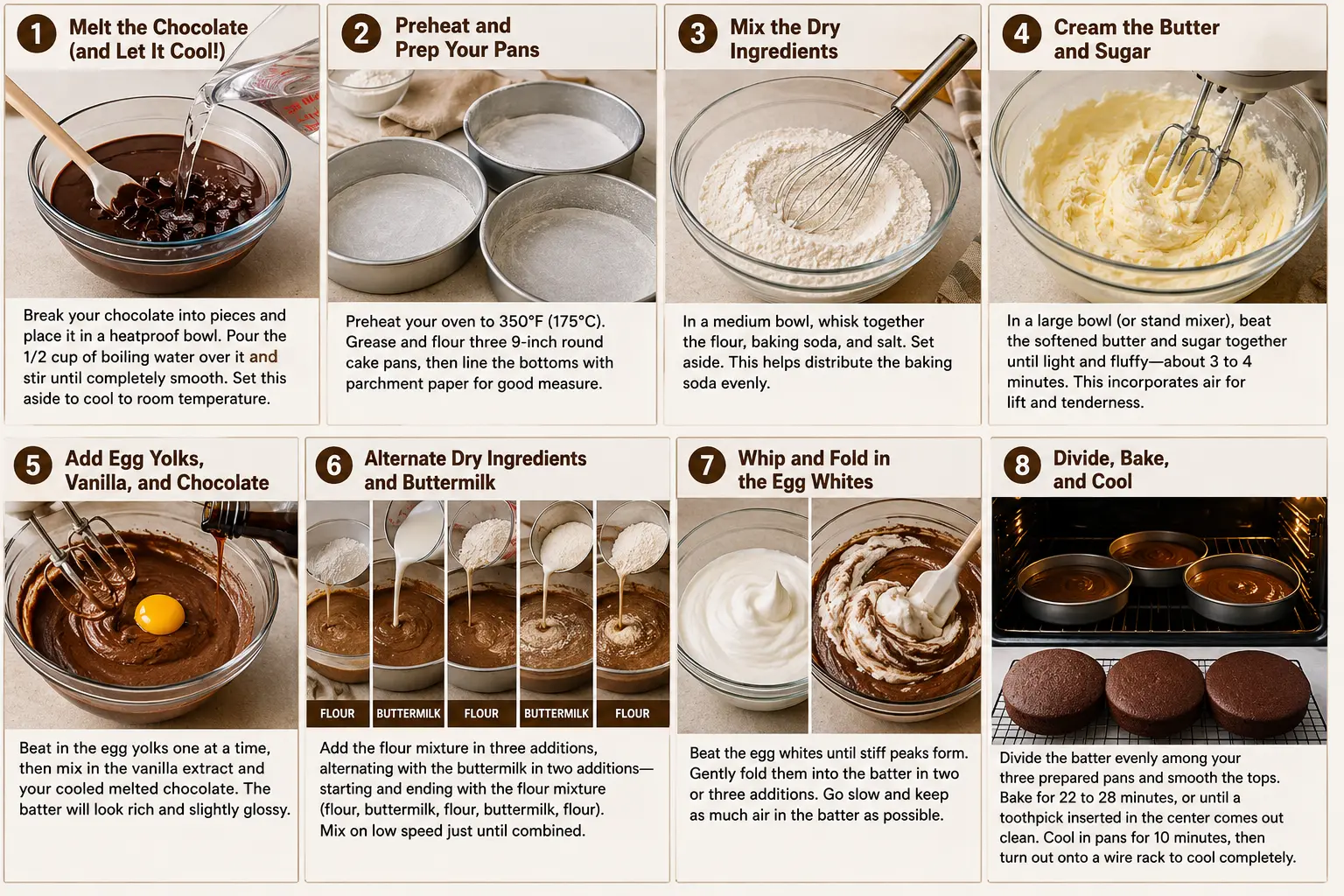
Break your chocolate into pieces and place it in a heatproof bowl. Pour the 1/2 cup of boiling water over it and stir until completely smooth. Set this aside to cool to room temperature. This step trips people up because it feels unnecessary — but if you add hot chocolate to your eggs and butter mixture later, you risk curdling everything. Patience now saves you a headache later.
Preheat and Prep Your Pans
Preheat your oven to 350°F (175°C). Grease and flour three 9-inch round cake pans, then line the bottoms with parchment paper for good measure. Trust me on the parchment — there’s nothing worse than a cake layer that won’t release cleanly after all that work.
Mix the Dry Ingredients
In a medium bowl, whisk together the flour, baking soda, and salt. Set aside. This is one of those steps that takes thirty seconds but makes a real difference — it distributes the baking soda evenly so you don’t end up with weird bitter pockets in your cake.
Cream the Butter and Sugar
In a large bowl (or the bowl of a stand mixer), beat the softened butter and sugar together until light and fluffy — about 3 to 4 minutes. Don’t rush this part. This is where you’re incorporating air into the batter, and that air is what gives your cake its lift and tender texture.
Add Egg Yolks, Vanilla, and Chocolate
Beat in the egg yolks one at a time, then mix in the vanilla extract and your cooled melted chocolate. The batter will look rich and slightly glossy at this point — that’s exactly what you want.
Alternate Dry Ingredients and Buttermilk
Add the flour mixture in three additions, alternating with the buttermilk in two additions — starting and ending with the flour mixture (flour, buttermilk, flour, buttermilk, flour). Mix on low speed just until combined after each addition. Overmixing at this stage is the most common reason cakes turn out dense, so as soon as you don’t see streaks of flour, stop.
Whip and Fold in the Egg Whites
In a separate, clean bowl, beat the egg whites until stiff peaks form. Gently fold them into the batter in two or three additions. Go slow here — you’re not trying to mix them in completely, just to incorporate them without knocking out all that air. This step is the secret to the light, almost cloud-like texture that sets this cake apart from a denser chocolate cake.
Divide, Bake, and Cool
Divide the batter evenly among your three prepared pans and smooth the tops. Bake for 22 to 28 minutes, or until a toothpick inserted in the center comes out clean. Let the cakes cool in their pans for about 10 minutes, then turn them out onto a wire rack to cool completely before frosting. Don’t skip the cooling step — warm cake layers plus warm frosting equals a sliding, sad-looking cake.
Now for the Best Part: The Coconut-Pecan Frosting
Here’s the thing about this frosting — it looks intimidating because it involves cooking eggs on the stove, but it’s really just a custard, and custards are much more forgiving than people give them credit for. As long as you keep stirring and keep the heat moderate, you’re in good shape.
Step 1: Toast Your Pecans
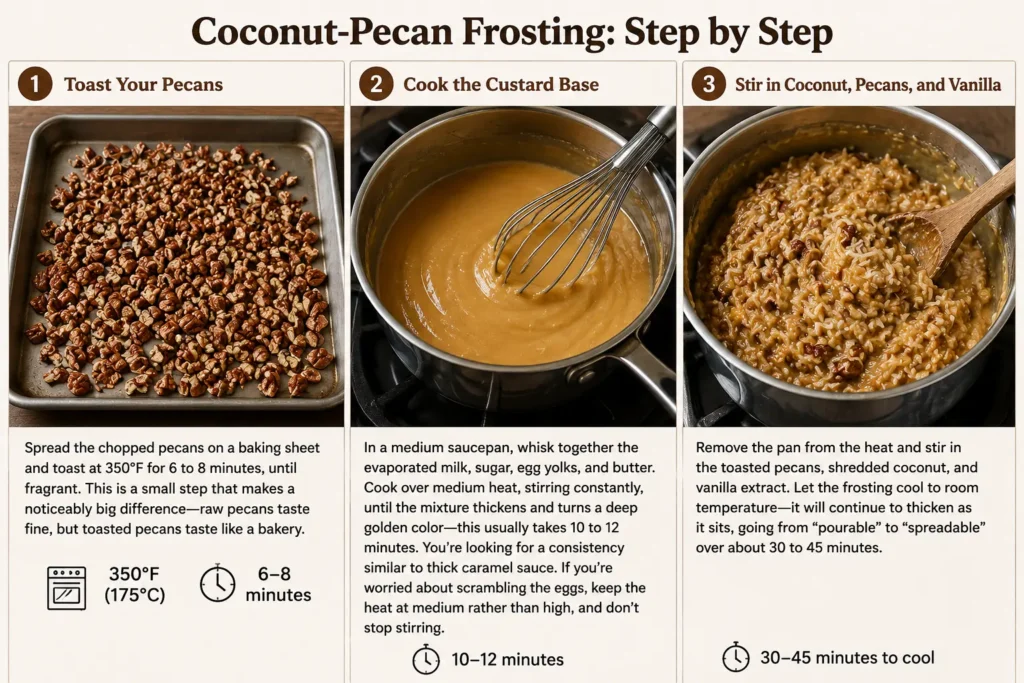
Spread the chopped pecans on a baking sheet and toast at 350°F for 6 to 8 minutes, until fragrant. This is a small step that makes a noticeably big difference — raw pecans taste fine, but toasted pecans taste like a bakery.
Step 2: Cook the Custard Base
In a medium saucepan, whisk together the evaporated milk, sugar, egg yolks, and butter. Cook over medium heat, stirring constantly, until the mixture thickens and turns a deep golden color — this usually takes 10 to 12 minutes. You’re looking for a consistency similar to thick caramel sauce. If you’re worried about scrambling the eggs, keep the heat at medium rather than high, and don’t stop stirring.
Step 3: Stir in Coconut, Pecans, and Vanilla
Remove the pan from the heat and stir in the toasted pecans, shredded coconut, and vanilla extract. Let the frosting cool to room temperature — it will continue to thicken as it sits, going from “pourable” to “spreadable” over about 30 to 45 minutes.
Assembling Your Cake
Once your cake layers are completely cool and your frosting has thickened to a spreadable consistency, place the first layer on your serving plate or cake stand. Spread a generous layer of frosting over the top — don’t be shy, this is the good part. Repeat with the second layer, then top with the third layer and frost the top.
Traditionally, German chocolate cake leaves the sides unfrosted, letting those gorgeous chocolate layers peek through. It’s a nice effect, and frankly, it’s one less thing for you to worry about. If you want a more finished look, you can press some extra toasted pecans around the edges, or pipe a simple border around the top with leftover frosting.
Tips for First-Timers (and a Few for the Pros, Too)
- Room temperature ingredients matter. Cold eggs and butter don’t combine smoothly, and you’ll end up with a lumpy batter. Set everything out about an hour before you start.
- Don’t walk away from the frosting. It needs constant stirring while it cooks. Step away for even a minute and you risk scorching the bottom.
- Make the frosting a day ahead. It actually holds up beautifully in the fridge overnight, and it gives you one less thing to do on baking day. Just bring it to room temperature before spreading.
- If your cake layers dome in the oven, let them cool completely, then use a serrated knife to level the tops before stacking. A flat surface makes assembly so much easier.
- No three matching pans? No problem. Bake in two 9-inch pans instead and slice each layer in half horizontally once cooled, giving you four thinner layers for extra frosting in between.
Final Thoughts
There’s something deeply satisfying about pulling off a cake like this — three soft, chocolatey layers, that glossy caramel-colored frosting oozing slightly over the edges, pecans and coconut catching the light. It’s the kind of dessert that makes people pause mid-conversation to ask who made it.
Yes, it takes a bit of time. Yes, there are a few more steps than your average box-mix cake. But none of those steps are hard — they just ask for a little attention and patience, and the payoff is a cake that tastes like it came from a bakery (or your grandmother’s kitchen, if you’re lucky enough to have one of those).
Frequently Asked Questions
What’s the difference between regular chocolate cake and German chocolate cake?
The cake itself is the main difference — German chocolate cake uses a lighter, sweeter baking chocolate and tends to have a softer, more delicate crumb than a standard rich chocolate cake. But honestly, what really sets it apart is the coconut-pecan frosting, which you won’t find on a typical chocolate layer cake.
What cake mix works best if I want a shortcut?
If you’re short on time, a standard chocolate cake mix or a “German chocolate” branded mix (where available) will work fine as the base — just make the coconut-pecan frosting from scratch, since that’s where the flavor really lives. Honestly, even bakers who care about quality often take this shortcut on busy weeks.
Can someone with diabetes enjoy German chocolate cake?
In moderation, yes — but the traditional version is quite high in sugar between the cake and that custard-style frosting, so it’s worth approaching thoughtfully. If you’re baking for someone managing diabetes, a few swaps can help: replace some or all of the granulated sugar with a baking-friendly sugar substitute (like erythritol or a monk fruit blend) in both the cake and frosting, and use unsweetened shredded coconut instead of sweetened. The texture will be slightly different, but the flavor holds up surprisingly well. As always, it’s a good idea for anyone managing blood sugar to check with their doctor or dietitian about how a treat like this fits into their plan, and to keep portion sizes modest.
How should I store leftover German chocolate cake?
Keep it covered at room temperature for up to two days, or in the fridge for up to five days thanks to that custard-based frosting. Just let refrigerated slices come back to room temperature before serving — the frosting tastes best when it’s not cold and stiff.