
Cinnamon Roll Cake: All the Cozy, None of the Yeast
A one-pan dessert that tastes like a cinnamon roll, smells like a bakery, and asks almost nothing of you.
There’s a smell that instantly takes me back to lazy Sunday mornings — cinnamon and brown sugar caramelizing in the oven, that warm cloud that fills the whole house before anyone’s even fully awake. For years, I figured that smell only came from real cinnamon rolls: the kind with yeasted dough, hours of rising, and an entire morning given over to rolling and shaping.
Then I started making cinnamon roll cake, and honestly? I haven’t gone back.
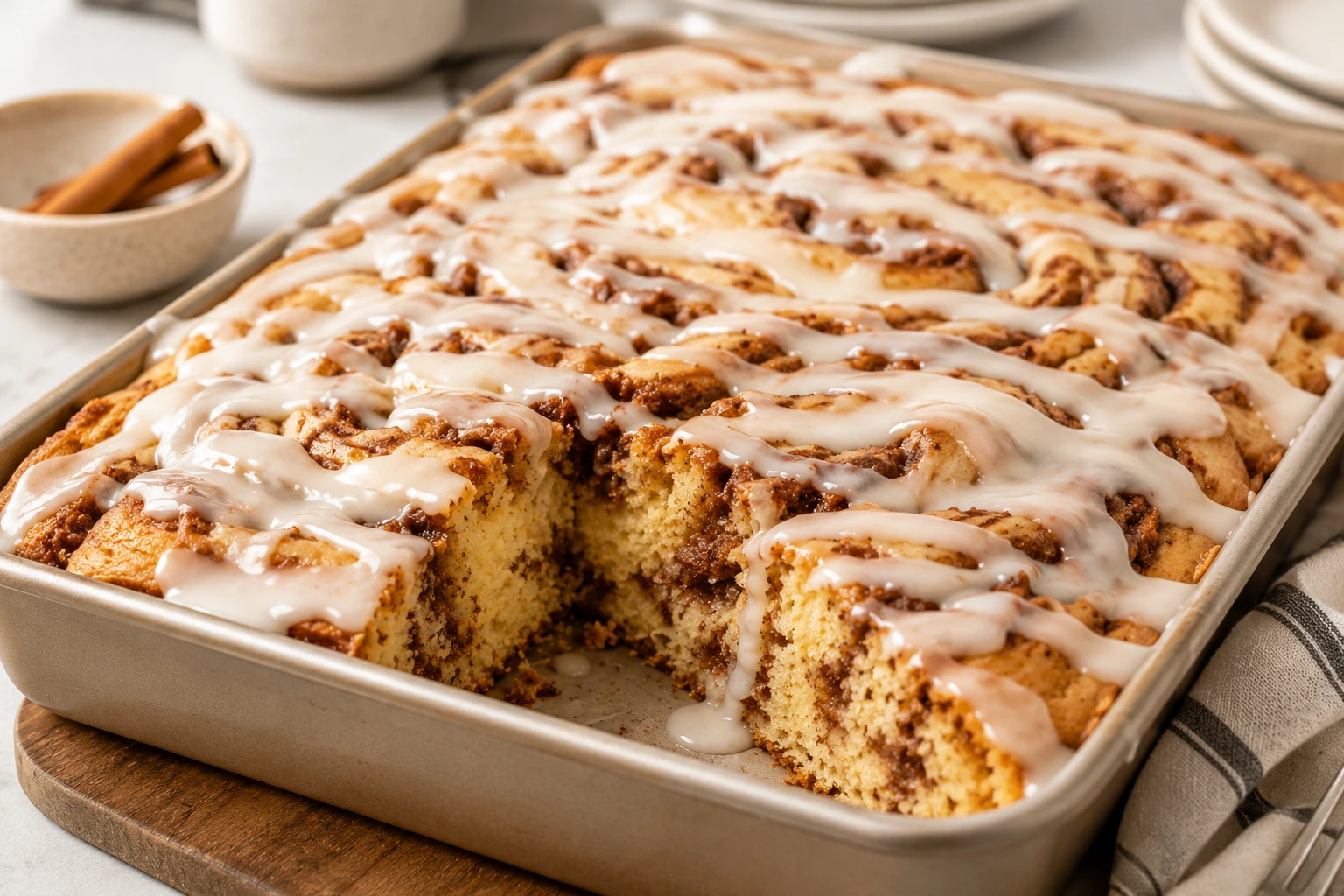
This cake takes everything you love about a cinnamon roll — that ribboned swirl of spiced sugar, the tangy glaze melting into every bite — and squeezes it into a single pan you can have in the oven before your coffee’s even finished brewing. No yeast, no kneading, no waiting around for dough to rise. Just a simple batter, a buttery cinnamon swirl, and a glaze that soaks in just enough to taste like frosting and behave like a drizzle.
Quick Takeaways
- This recipe leans on a boxed cake mix as its base — a totally legitimate shortcut that pros use too.
- Hands-on time is around 15–20 minutes; the oven does the rest.
- One 9×13-inch pan gives you roughly 12–15 generous squares.
- A couple of simple baking “rules” (more on those below) will make this — and every cake you bake — turn out better.
- Watching your sugar? There’s an easy way to lighten this up without losing the cinnamon-roll magic.
Why This “Cheater” Cake Actually Works
Let’s get something out of the way: using a box of cake mix doesn’t make you any less of a baker. Some of the best home cooks I know keep a couple of boxes in the pantry for exactly this kind of project. The mix gives you a reliably moist, tender base — which frees you up to focus on the part that actually makes this dessert special: the cinnamon swirl.
Think of the cake batter as the canvas. The cinnamon-butter-sugar mixture you’ll layer through the middle is where all the cinnamon roll flavor lives. And the cream cheese glaze on top? It does the same job as the icing on a cinnamon roll — except here, it melts slightly into the warm cake, leaving little pockets of gooey sweetness scattered throughout.
What You’ll Need
No specialty ingredients here — just things that are probably already sitting in your kitchen.
Cinnamon Roll Cake
Ingredients
Equipment
Notes
Product Recommendation Sections Above or Below Recipes
Tools I Used for Cinnamon Roll Cake
KitchenAid Artisan Stand Mixer Breville Smart Oven Air Fryer Pro
 Le Creuset 9×13 Baking Dish
Let’s Bake: Step by Step
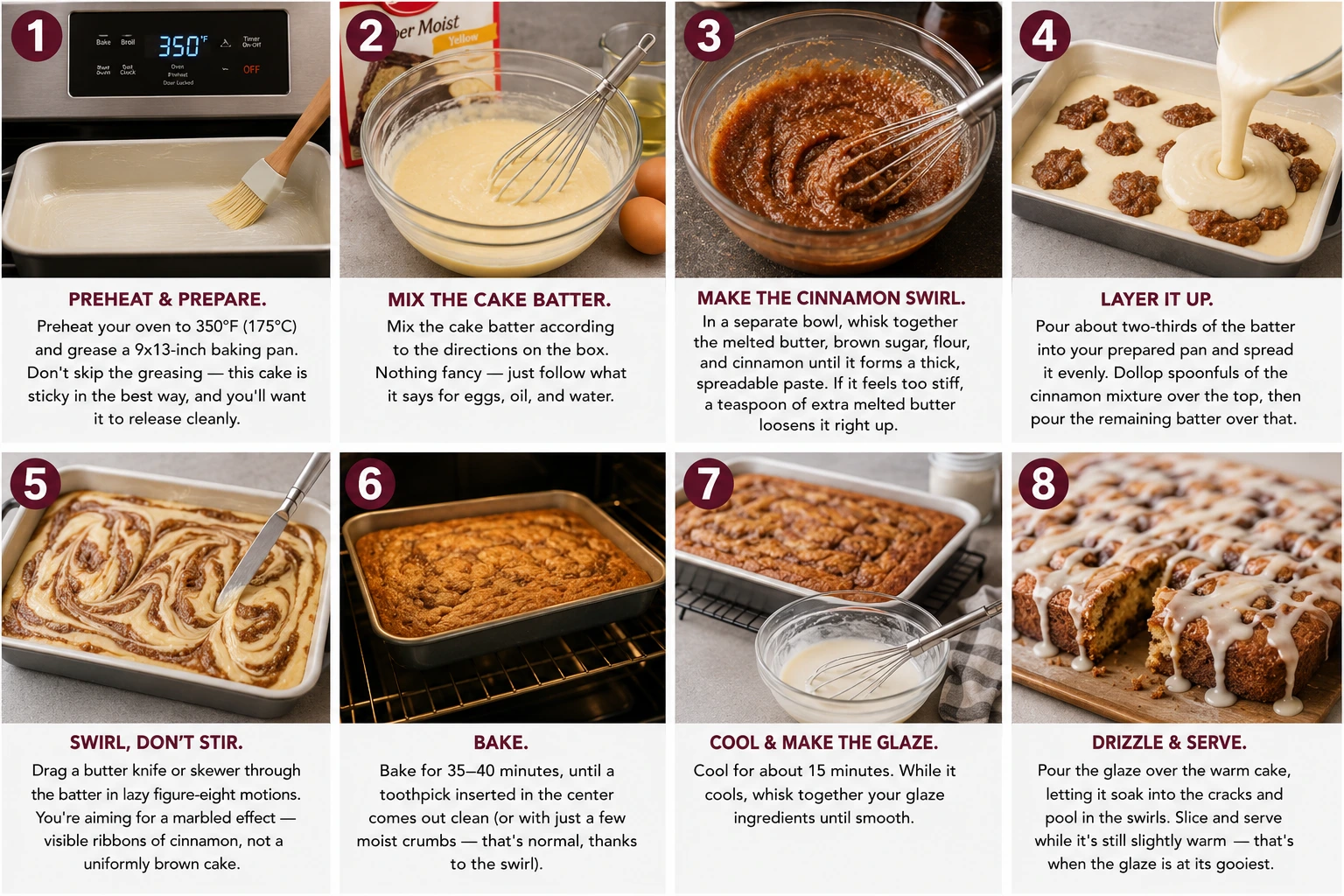
Preheat your oven
to 350°F (175°C) and grease a 9×13-inch baking pan. Don’t skip the greasing — this cake is sticky in the best way, and you’ll want it to release cleanly.
Mix the cake batter
according to the directions on the box. Nothing fancy — just follow what it says for eggs, oil, and water.
Make the cinnamon swirl
In a separate bowl, whisk together the melted butter, brown sugar, flour, and cinnamon until it forms a thick, spreadable paste. If it feels too stiff, a teaspoon of extra melted butter loosens it right up.
Layer it up
Pour about two-thirds of the batter into your prepared pan and spread it evenly. Dollop spoonfuls of the cinnamon mixture over the top, then pour the remaining batter over that.
Swirl, don’t stir
Drag a butter knife or skewer through the batter in lazy figure-eight motions. You’re aiming for a marbled effect — visible ribbons of cinnamon, not a uniformly brown cake.
Bake for 35–40 minutes
until a toothpick inserted in the center comes out clean (or with just a few moist crumbs — that’s normal, thanks to the swirl).
Cool for about 15 minutes
While it cools, whisk together your glaze ingredients until smooth.
Drizzle and serve
Pour the glaze over the warm cake, letting it soak into the cracks and pool in the swirls. Slice and serve while it’s still slightly warm — that’s when the glaze is at its gooiest.
My Best Tips for Getting This Right Every Time
Here’s the thing about baking: most “failed” cakes aren’t really about the recipe — they’re about a few small habits. A couple of these come up again and again in my own kitchen, so let’s tackle them head-on.
Get to know the “1234” rule
It’s an old baker’s shorthand — 1 cup butter, 2 cups sugar, 3 cups flour, 4 eggs — describing the classic ratio for a basic pound cake. You don’t need it for this recipe since we’re using a mix, but understanding why ratios matter will make every from-scratch cake you attempt far more forgiving.
Oven temperature isn’t a suggestion
Cranking the heat from 350°F to 400°F won’t get your cake done faster in any useful way — it’ll set the outside before the inside has a chance to cook through, leaving you with a cake that’s burnt on top and gummy in the middle. If your oven runs hot, an oven thermometer is one of the cheapest upgrades you can make to your baking.
Don’t over-swirl
I know it’s tempting to keep dragging that knife through the batter until it looks “perfect,” but over-mixing the swirl blends the cinnamon layer into the batter entirely — and suddenly you’ve got a brown cake instead of a marbled one. A few confident swoops are all you need.
Turning This Into a Birthday Showstopper
This cake is humble enough for a Tuesday, but it scales beautifully for a celebration. Double the recipe into a half-sheet pan, and you’ve got a casual, crowd-pleasing birthday cake that doesn’t require any fondant or piping skills.
A few small touches make it feel party-ready: swap the plain glaze for a thicker cream cheese frosting you can pipe in dollops, scatter some chopped pecans or extra cinnamon-sugar on top, and stick a few candles right in. Nobody’s going to ask if it came from a box — they’re going to ask for the recipe.
Give It a Try
There’s something deeply satisfying about a recipe that delivers way more flavor than the effort it asks of you — and this cinnamon roll cake is exactly that kind of recipe. It’s the one I make when I want my kitchen to smell like I’ve been baking for hours, even though I really haven’t.
If you try this one, I’d love to hear how it turns out. Tweak the swirl ratio, find the perfect glaze thickness, or turn it into a birthday masterpiece — then drop a comment and share what worked for you. Recipes get better when we trade notes, and yours might be exactly the tip another reader needs.
Frequently Asked Questions
How do you make a cinnamon roll cake with cake mix?
It comes down to layering: pour most of your cake batter into the pan, add a cinnamon-butter-sugar mixture in the middle, top with the rest of the batter, then swirl gently before baking. The mix handles the cake’s texture; your swirl handles the flavor.
What are the “7 rules” for baking the perfect cake?
There’s no single official list, but the basics most bakers agree on include: measure ingredients accurately (weigh when you can), bring eggs and butter to room temperature, avoid overmixing the batter, fully preheat your oven, resist opening the oven door early, use the pan size the recipe calls for, and test for doneness with a toothpick rather than relying on time alone.
Can a quarter-sheet cake really feed 40 people?
Not quite. A standard quarter-sheet cake (around 9×13 inches) typically yields 12–20 servings depending on slice size, which makes it perfect for smaller gatherings. For 40 guests, you’d want a full sheet cake, or two quarter-sheets like this one.
Which cake is best for someone watching their blood sugar?
Cakes made with almond or coconut flour and sweetened with substitutes like erythritol or monk fruit tend to have a gentler effect on blood sugar than traditional cakes. To lighten up this recipe specifically, look for a sugar-free cake mix and swap the brown sugar in the swirl for a brown-sugar substitute — the texture stays remarkably close to the original.