
Healthy Smoothie Recipes That Actually Work — A Chef Explains How
No complicated equipment, no confusing ingredient lists. Discover Healthy Smoothie Recipes made with real, nourishing ingredients that you can blend in under 5 minutes—even on your busiest morning.
🍃 What You’ll Learn in This Guide
- The “Rule of 3” framework every beginner needs before blending anything
- Two step-by-step smoothie recipes: one for energy, one for blood sugar balance
- Which ingredients to always keep in your kitchen — and which to avoid
- Chef tips that make a real difference in taste and nutrition
- Answers to the most common smoothie questions — including one about tooth extraction
Let me be honest with you: the first smoothie I ever made was terrible. I threw in a banana, some frozen mango, a handful of spinach I felt guilty about not using, and a splash of orange juice. The result? A grayish-green liquid that looked like something from a science experiment and tasted only slightly better.
That was fifteen years ago. Since then, I’ve spent time in professional kitchens, worked with nutritionists, and — more importantly — made every possible smoothie mistake so you don’t have to. What I’ve learned is this: a great healthy smoothie isn’t about throwing in as many “superfoods” as possible. It’s about understanding a few simple principles and letting them guide you.
Whether you’re brand new to blending or you’ve been making the same two smoothies for years and want to level up, this guide is for you. We’re going to start with the fundamentals, build up to two complete recipes with step-by-step instructions, and finish by answering the questions I hear most often. Ready? Let’s blend.
The Rule of 3: The Framework Every Beginner Needs
Before we touch a single ingredient, I want to teach you something I call the Rule of 3. It’s the single most useful piece of smoothie knowledge I can give you, and once you understand it, you’ll be able to create balanced, delicious smoothies without ever needing a recipe again.
🧪 The Smoothie Rule of 3
1-Your Base Liquid
This controls texture and nutrition. Unsweetened almond milk, coconut water, plain water, or low-fat dairy milk all work beautifully. Avoid fruit juices — they add sugar without fiber.
2-Your Fruit (or Vegetable)
Stick to one or two fruits maximum. Mixing too many creates sugar overload and odd flavors. Frozen fruit gives creaminess without adding ice.
3-Your Power Boost
One protein or healthy fat source — Greek yogurt, nut butter, chia seeds, flaxseed, or protein powder. This is what keeps you full and prevents blood sugar spikes.
That’s it. Base + Fruit + Boost. Every recipe in this guide follows that structure, and I’d encourage you to use it whenever you experiment on your own. It keeps things simple, balanced, and — most importantly — actually tasty.
The Healthiest Ingredients to Keep in Your Kitchen
You don’t need an exotic grocery list to make healthy smoothies. In my kitchen, I keep a small rotation of ingredients that I know work well together and deliver real nutritional value. Here’s what I recommend for beginners:
For your base: Unsweetened almond milk is my top pick — it’s low in calories, creamy, and neutral enough to work with almost any flavor. Coconut water is a great choice when you want something lighter with natural electrolytes.
For fruit: Frozen berries (blueberries, strawberries, raspberries) are your best friends. They’re low in sugar compared to tropical fruits, incredibly high in antioxidants, and they make your smoothie perfectly thick and cold without ice. Bananas add creaminess, but if blood sugar is a concern for you, use just half.
For greens: Baby spinach is the beginner’s secret weapon. I promise you — you cannot taste it. It blends invisibly and adds iron, magnesium, and fiber without changing the flavor at all. Start with one small handful.
For your power boost: A tablespoon of chia seeds or ground flaxseed is something I add to almost every smoothie I make. They’re rich in omega-3 fatty acids and fiber, and they help slow down how quickly your body absorbs the natural sugars in the fruit. That’s a big deal, especially for anyone watching their blood sugar.
Recipe 1: The Everyday Green Energy Smoothie
This is the smoothie I make on Monday mornings when I need to feel human again. It’s bright, refreshing, and gives you steady energy without the crash you’d get from coffee on an empty stomach.
Recipe 2: The Blood Sugar Balance Smoothie
A lot of people come to me asking about smoothies for diabetes, and honestly, the concern is valid. Many store-bought or casually made smoothies are essentially sugar bombs in disguise. This recipe was specifically designed to be low-glycemic — meaning it releases energy slowly and won’t send your blood sugar spiking. It’s also gentle enough for anyone who’s just looking for a cleaner, more balanced start to their day.
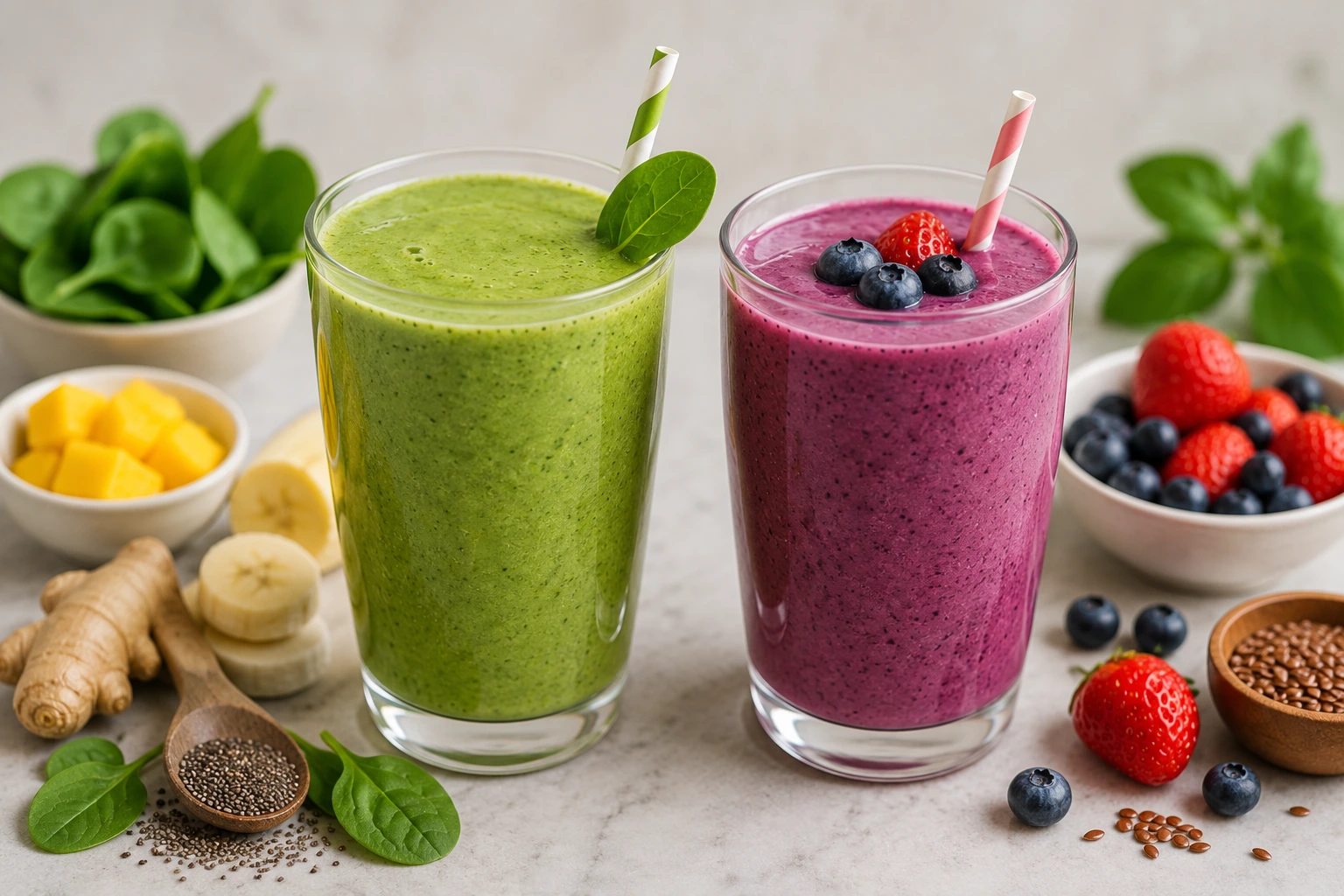
Ingredients
Equipment
Notes
Product Recommendation Sections Above or Below Recipes
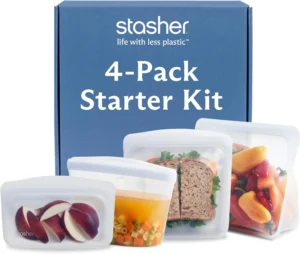
Tools I Used for Healthy Smoothie Recipes
Vitamix A3500 Ascent Series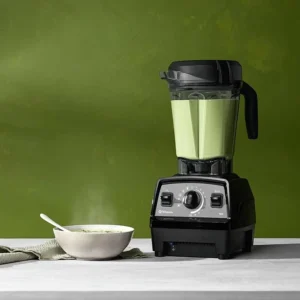 OXO Good Grips Digital Food Scale
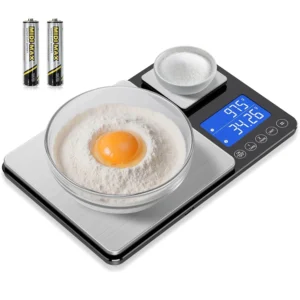 Hydro Flask Insulated Tumbler with Straw Lid
 Stasher Reusable Silicone Storage Bags
Step-by-Step Instructions
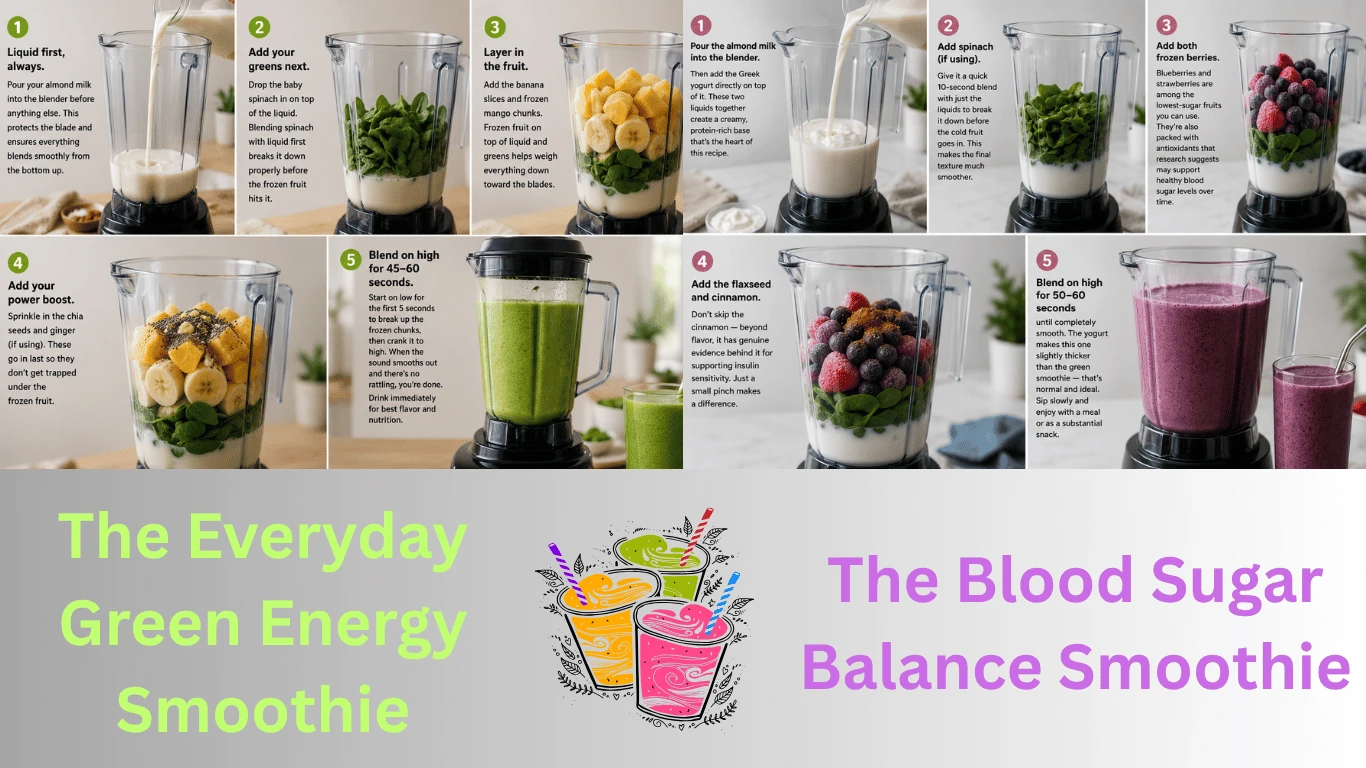
1-Liquid first, always
Pour your almond milk into the blender before anything else. This protects the blade and ensures everything blends smoothly from the bottom up.
2-Add your greens next
Drop the baby spinach in on top of the liquid. Blending spinach with liquid first breaks it down properly before the frozen fruit hits it.
3-Layer in the fruit
Add the banana slices and frozen mango chunks. Frozen fruit on top of liquid and greens helps weigh everything down toward the blades.
4-Add your power boost
Sprinkle in the chia seeds and ginger (if using). These go in last so they don’t get trapped under the frozen fruit.
5-Blend on high for 45–60 seconds
Start on low for the first 5 seconds to break up the frozen chunks, then crank it to high. When the sound smooths out and there’s no rattling, you’re done. Drink immediately for best flavor and nutrition.
Chef’s tip: If your smoothie is too thick, add liquid one tablespoon at a time — not a full pour. It thins out faster than you’d expect. If it’s too thin, add a few more frozen fruit pieces.
1-Pour the almond milk into the blender
Then add the Greek yogurt directly on top of it. These two liquids together create a creamy, protein-rich base that’s the heart of this recipe.
2-Add spinach (if using)
Give it a quick 10-second blend with just the liquids to break it down before the cold fruit goes in. This makes the final texture much smoother.
3-Add both frozen berries
Blueberries and strawberries are among the lowest-sugar fruits you can use. They’re also packed with antioxidants that research suggests may support healthy blood sugar levels over time.
4-Add the flaxseed and cinnamon
Don’t skip the cinnamon — beyond flavor, it has genuine evidence behind it for supporting insulin sensitivity. Just a small pinch makes a difference.
5-Blend on high for 50–60 seconds
until completely smooth. The yogurt makes this one slightly thicker than the green smoothie — that’s normal and ideal. Sip slowly and enjoy with a meal or as a substantial snack.
Chef’s tip: If you’re managing type 2 diabetes, always pair your smoothie with a small amount of protein or healthy fat on the side — a few almonds, a boiled egg, or some avocado — to further slow glucose absorption. And of course, check with your doctor or dietitian before making major changes to your diet.
Your Blender is Waiting
You now have everything you need to make two genuinely healthy, delicious smoothies — and the framework to invent your own. Start with one recipe this week. Just one. See how you feel after a few days of a nourishing morning routine.
Frequently Asked Questions
QAre smoothies OK for people with type 2 diabetes?
Yes — but the ingredients matter enormously. A smoothie made with whole frozen fruit (especially berries), a protein source like Greek yogurt, fiber from flaxseed or chia, and a low-sugar liquid base like unsweetened almond milk can absolutely be part of a diabetes-friendly diet. The key is avoiding high-sugar add-ins: fruit juice as a base, honey, sweetened yogurt, or large amounts of high-glycemic fruits like pineapple or mango. Always choose smoothies that won’t spike your blood sugar — meaning they’re built with fiber, protein, and healthy fat to slow glucose absorption. When in doubt, check with your healthcare provider, especially if you’re on medication.
QWhat fruits should NOT be mixed together in a smoothie?
While there’s no hard rule that makes certain fruit combinations dangerous, some pairings simply don’t work well together — either for flavor or for your digestion. Very acidic fruits (like citrus) combined with sweet fruits (like bananas) can cause bloating for some people. Melons are best blended alone — they digest quickly and can ferment when combined with slower-digesting fruits, causing discomfort. For smoothies specifically, the practical rule is: stick to one flavor family per blend. Berry + banana works. Mango + pineapple works. Citrus + banana + mango is where things start getting muddy in taste and harder on the stomach.
QCan diabetics drink smoothies every day?
They can — with the right recipe and portion size. The daily smoothie habit becomes a problem when people treat it as a “health drink” while unknowingly loading it with sugar. A well-constructed smoothie like the Blood Sugar Balance recipe above, consumed consistently in the right portion (roughly 10–12 oz), can actually be a helpful part of managing blood sugar by providing consistent fiber and protein intake. That said, variety in your diet is always important. Rotating smoothies with other balanced breakfasts keeps your nutrition diverse and prevents over-reliance on any single meal. Monitor how your blood sugar responds and adjust accordingly.
QWhat smoothie is safe to drink after a tooth extraction?
After a tooth extraction — especially in the first 48–72 hours — your diet needs to be cold, soft, and gentle. A smoothie can be perfect, but there are important rules. Avoid using a straw entirely for the first 24–48 hours, as suction can dislodge the blood clot that’s protecting the socket (a painful condition called dry socket). Pour into a cup and sip gently instead. Choose ingredients that are soft and non-irritating: banana, avocado, yogurt, or soft berries work well. Skip anything acidic (citrus) or with small seeds (chia, flaxseed) that could get trapped in the socket. Keep your smoothie cold but not icy — extreme cold can actually be soothing to inflammation. By day 4 or 5, most people can return to a normal smoothie routine, but always follow your dentist’s specific instructions.